RISK-INTELLIGENCE FOR SMALL-BUSINESS INSURANCE
· VOL. 11, WEEK OF OCTOBER 19, 2026
· 5-MINUTE READ
The money set another record. It is still reading the risk off a handful of models.
IN THIS ISSUE
•
The one to discuss. Catastrophe bonds just set another record, and the woman who built the first model says the whole market is still pricing off too few of them.
•
A software company buys an insurer's underwriting arm and keeps the underwriting pen, letting a reciprocal carry the risk.
•
A startup launches with $10 million to pull data entry out of brokering, inside the broker's own inbox.
FROM THE DESK
A video clip went around the desk this week. The person who built the first catastrophe model, on a conference stage, telling the room that buys catastrophe risk to stop trusting just one model. It is a strange thing, watching the creator of a tool warn you about leaning too much on its utility. The same morning, the quarterly numbers put money deployed in the catastrophe-bond market a rounding error short of another record, and two more startups announced raising money to make the paperwork around insurance faster. Cheaper capital, faster machinery,
only one shared view of the risk. We here at Friend kept circling the one part, the read on risk part, of the current insurance picture folks have acknowledged as important, yet seemingly nobody had funded.
NEWCOMBE · FOUNDER, FRIEND · NEW YORK
BY THE NUMBERS
$18.9B
Cat bond issuance, first nine months of 2026: a new record
$948M
New cat bonds priced in the third quarter, from ten deals
$65.5B
Cat bonds outstanding at end-September, up about 7% since year-end
$95M
Paid for an insurer's underwriting arm, and almost none of its risk
THIS WEEK · THE ONE TO DISCUSS
THE ARGUMENT
A record year for catastrophe bonds, and the woman who built the first model is the one warning the market is pricing off too few of them. Capital is abundant. An independent read on each risk is the scarce thing.
The pile of money for risk keeps growing
A catastrophe bond (aka a 'cat bond') is a way for an insurer to buy their own risk cover from investors instead of from a reinsurer: the investor earns a yield unless a named catastrophic disaster (think hurricane) strikes. If the cat does in fact happen, the money pays the insurer's losses. In the first nine months of 2026 that market issued $18.9 billion of new cat bonds, a record, past 2025's total $18.6 billion high, with a full quarter still to run. Another $1.1 billion in the fourth quarter would carry the year past $20 billion. The outstanding cat bond market reached $65.5 billion at the end of September, up about 7% since year-end and near a record, with fourteen first-time investors coming to market this year. The money keeps arriving.
All of the pile priced off the same few models
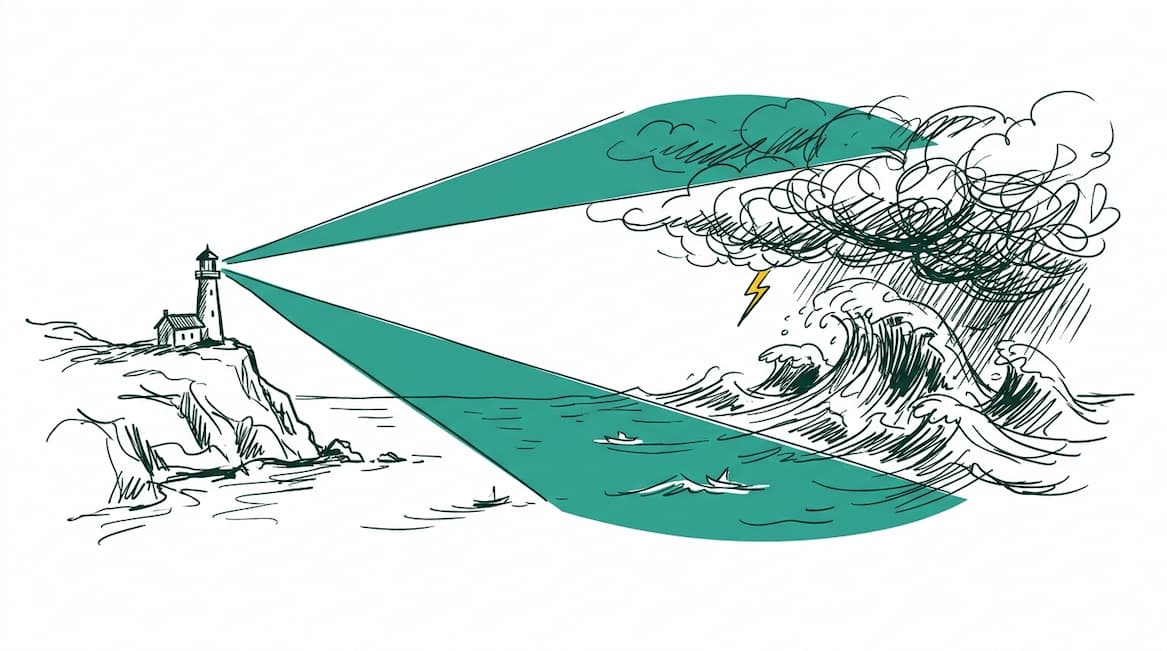
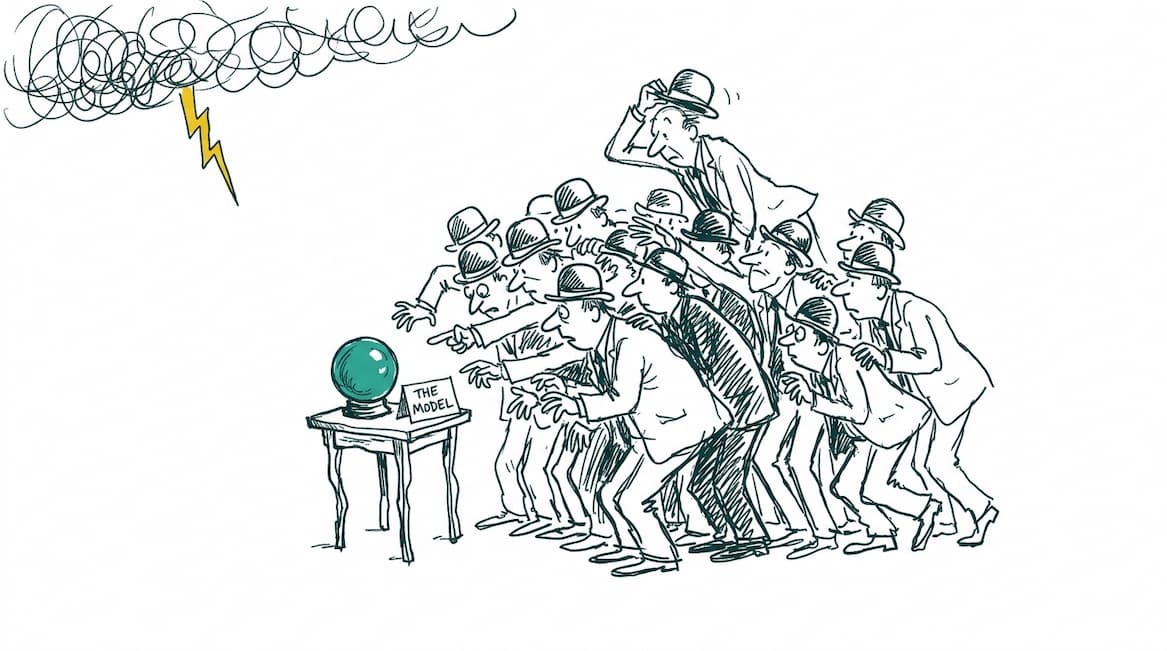
Karen Clark built the first commercial hurricane model, so she has as much standing to defend the practice of using analytics to predict risk as anyone alive. Instead, at an industry conference this month, she told the investors buying this risk that nearly all of it is priced off the same handful of vendor models. These models, which typically take the form of the licensed software the insurance market uses to estimate the odds and cost of a catastrophe, seem to be inadequate in Clark's view. She urged the industry to demand alternative model views and more data before they decide what risks to hold. To be fair, Clark sells one of those alternative models she's advocating, however her point survives the conflict, because it is the quiet hazard spoken aloud in every number here: when the whole market prices off one model, that model's blind spots become the market's, all at once and invisibly. Invisible of course until the year the model missed (i.e. that unpredicted catastrophe) arrives to find everyone. A record total of new funds and a trusted legacy risk model are both answers to a question nobody has asked carefully enough. What, exactly, is now being used to price novel risks, and has anyone recently rechecked its legacy math?
THE EXHIBIT
Every year the cat bond market raises more money. 2025 was the biggest ever.
New catastrophe bonds brought to market each year, all deals tracked by Artemis; one block is about $1 billion. After the 2022 lull, issuance climbed to an all-time high in 2025.
2021
$14.0B
2022
$10.5B
2023
$16.4B
2024
$17.7B
2025
$25.6B
2026 is on the same path. A record $18.9 billion of new bonds priced in the first nine months, a nine-month high, with the market about $1.1 billion short of its first $20 billion calendar year on the 144A measure.
Source: Artemis full-year catastrophe bond issuance totals, all deals tracked, 2021 to 2025; Artemis Q3 2026 market report for the 2026 figure. Bars to scale.
THE FRIEND READ
Capital and the machinery to deploy it are both still cheap right now, and almost none of that abundance reaches the corner restaurant, because the restaurant has never been graded for its individual risk. About $4.3 billion of fresh risk transfer capacity went looking for catastrophe risk to hold this year; on a $7,500 restaurant package, a real read on the risks facing the building housing that kitchen might be worth $1,000 of more accurate pricing. However under current blunt math, what the owner gets is a blended risk number with their neighbor and maybe a few extra dollars left in their pocket. The model priced the hurricane for everyone. Nobody priced the kitchen. The individual business graded read is the one input a record total of money cannot supply on its own, and it is the thing Friend is building.
ARTEMIS · KAREN CLARK & COMPANY · ILS BERMUDA CONVERGENCE 2026
THE JARGON, TRANSLATED
Vendor model
A predictive risk model sold by a specialist firm and licensed across the industry to estimate the odds and the cost of risks such as hurricanes, quakes and floods. It is useful and it is standard. The trouble starts when everyone prices off the same few models, because then their blind spots quietly become the whole market's.
REINSURANCE NEWS · PORCH GROUP SEC 8-K · 14 OCTOBER 2026
Porch Group, a home-services software firm rebuilding itself around insurance, agreed to buy Allied Trust's managing general agent and captive reinsurer for about $95 million ($75 million cash plus roughly $20 million in shares), while its affiliated reciprocal exchange buys Allied Trust's carrier for $55 million cash, with $50 million more deferred over the year after closing. Allied Trust writes in Louisiana, Texas, and the Carolinas, with Louisiana close to half its 2025 total premium. After the deal closes, expected in early 2027, the reciprocal owns the carrier and the risk, and Porch keeps the MGA, collecting commissions and fees on the premium it administers.
THE FRIEND READ
Look at which piece the software company kept. Not the carrier, not the balance sheet, not the risk, but the MGA: the arm that decides which risks get written and what those risks cost. In the end it holds almost none of the loss from potential claims. An MGA's margin runs around 15% of premium it collects, so on a $9,000 package insurance policy roughly $1,350 follows the pen to the MGA, not the underlying paper that Porch offloaded. The capital went one way and the underwriting decision went the other, and this deal is a clean statement of where the value sits and for whom. The only thing $95 million does not settle, as far as we can tell, is whether the math underwriting the risk selection is any good.
FINTECH GLOBAL · BONFIRE VENTURES · 14 OCTOBER 2026
Bind AI, a New York insurtech, launched publicly with $10 million led by Bonfire Ventures, with Ramp co-founder Karim Atiyeh and Draper Associates also in the funding round. Rather than a separate tech platform, it works inside brokers' own email inboxes and carrier quoting portals, reading incoming insurance submissions and documents, working out what information each quote needs, and completing automatically the quote-to-bind tasks for a broker to review. The company says it is used by hundreds of agencies, has quoted hundreds of millions of dollars of premium through carrier portals, and saves agencies hundreds of hours a month. Its founder, Tony Marshi, put it plainly: agents did not get into insurance to do data entry, but that is where their days go.
THE FRIEND READ
The pitch is exactly right about where a broker's day goes and quiet about where the margin is. A few hundred hours a month, costing roughly $60 an hour, is $12,000 to $15,000 of clerical time handed back. Reading the inbox and filling the portal is clerical work, and none of it is the actual decision to underwrite the account, and at what price. The submission still has to be read, the risk still graded, the price still judged against it. The hours this frees are worth the most if they go to that read of the math, and worth very little if they just buy time to push a hundred more submissions through without improving the underlying precision of the read.
THE WEEK, IN ONE LINE
Capital to transfer risk set another record and the machinery around it got quicker again, yet the one input none of this faster cash supplies, an independent read on each risk, is exactly the thing the whole shebang is still short of.
ASK FRIEND
Now open
Reply to this note with the insurance question you would be slightly embarrassed to ask your broker. The first issue of every month answers one of them in plain language. No names, no follow-up sales call, and if the honest answer is "nobody knows," we will say that.
The large US property-casualty insurers and reinsurers begin posting third-quarter results, the first real read on how a softening market is landing in carrier margins.
NOVEMBER
The Council of Insurance Agents and Brokers posts its third-quarter commercial pricing survey, the next real print on whether small-commercial rates keep drifting down.
1 JANUARY 2027
Reinsurance renewals, where all this abundant capital either keeps pushing catastrophe-bond and reinsurance pricing down or finally finds a floor.
We're building the risk-intelligence layer for small-business insurance.
The Green, Yellow, and Red score that tells a careful operator from a careless one, and lets the market's discount reach the ones who earn it. If you want the full plan, or you just want to learn more, reach us at
newcombe@friendanalytico.com, or simply reply to this note. Whether you are thinking about investing or only want to learn more, either is welcome.
EVERY BUSINESS IS A CROSS-SECTION
· CLARITY IS THE PRODUCT.
A weekly read on small-business insurance from Friend, which builds the score that tells a careful operator from a careless one. You're getting it because you're close to us; if we've read something wrong, reply and say so, the more brutal the feedback the better.
Why you're reading this, in full →