|
FRIEND OF FRIEND
/ THE WEEKLY
|
VOL. 12
· 2026
|
RISK-INTELLIGENCE FOR SMALL-BUSINESS INSURANCE
· VOL. 12, WEEK OF OCTOBER 26, 2026
· 5-MINUTE READ
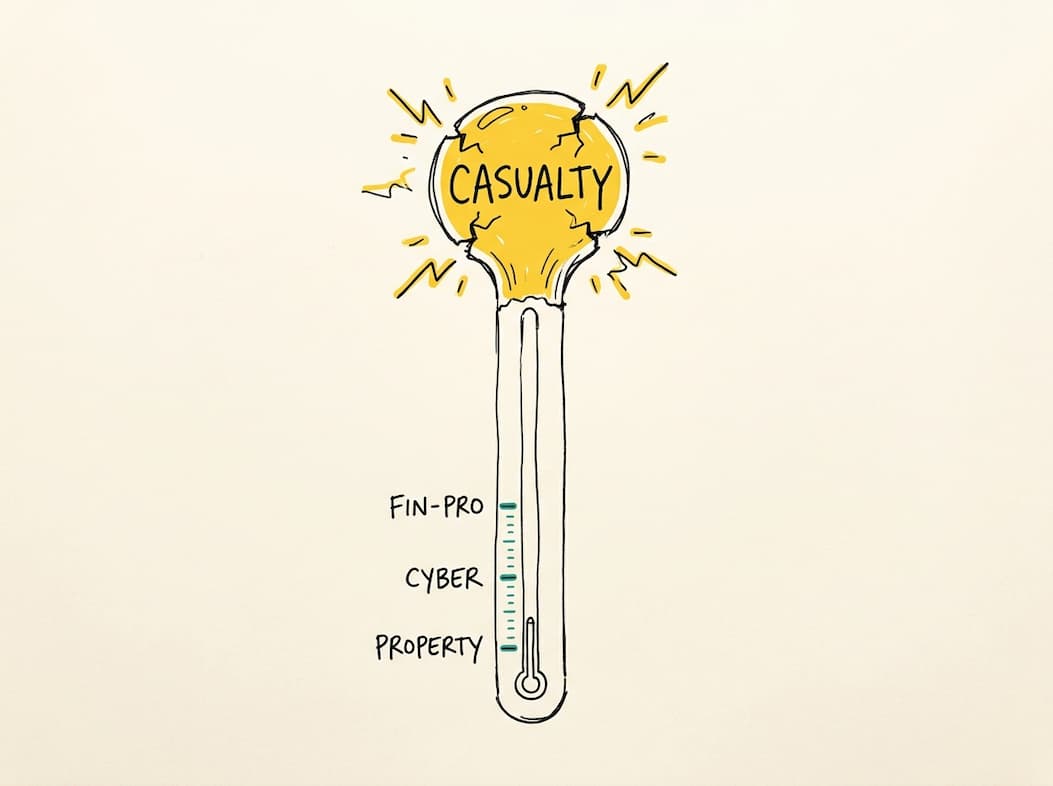
Every price in the market is falling, except the one a lawsuit lurks in.
|
IN THIS ISSUE
|
•
|
The one to discuss. Nine straight quarters of falling commercial insurance rates, and the only line still climbing is casualty, the policy that pays when someone sues.
|
|
•
|
The whole industry books an underwriting profit for 2026, but general liability and commercial auto, the lines a storefront usually cannot do without, still run at a loss.
|
|
•
|
A new broker swaps the typical 15% to 25% commission for a flat 5% fee and aims it straight at small accounts.
|
|
•
|
Chubb, the most profitable insurance carrier in the market, is deliberately shrinking the business it cannot reliably price.
|
|
FROM THE DESK
A contractor I know (imagined) opened his policy renewal quote last week, saw a number three dollars under last year's price, and filed it away as good news. One less thing to worry about, which ideally is how insurance should work, as an unburdensome afterthought. He was half right in his positive assessment. His building coverage had come down with the rest of the property market, yet his liability line cost had gone up by almost exactly as much as his property price fell, so the two cancelled on the page and hid the one movement that should worry him. That is the whole issue this week. The market is handing back price on the risks it can see more clearly while quietly charging more for the risk it cannot. On a small account like my imaginary friend's, the two separate coverages arrive blended into a single premium that looks like nothing changed from last year. We here at Friend find that lack of clarity bothersome.
NEWCOMBE · FOUNDER, FRIEND · NEW YORK
BY THE NUMBERS
|
-5%
Global commercial insurance rate change, Q3 2026, a ninth straight quarterly fall
|
+6%
US casualty rate change, Q3 2026, the one major line still rising
|
92.7
Workers' comp 2026 combined ratio, a 12th profitable year, while general liability stays above 100
|
5%
Delegance's flat broker fee, against the 15% to 25% a commission takes
|
|
THIS WEEK · THE ONE TO DISCUSS
|
THE ARGUMENT · FIG. 01
|
|
The market is cutting the price of every risk it can see clearly and raising the price of the one it cannot. Property, cyber, and financial lines are all cheaper. Casualty, the cover that pays when a customer gets hurt and sues, is the lone exception, and it is the exposure a small business can least afford to carry on its own.
The discount is broad and it is real
Marsh's third-quarter index, the broadest read on what commercial insurance buyers actually pay, has global rates down 5%, the ninth quarterly decline in a row. Property led the fall at 10% cheaper, cyber came off 4%, and financial and professional lines dropped 3%, their seventeenth straight quarter down. For most of what a company insures, this is considered a "soft market", the kind where a buyer can ask for a cut in premium and get it.
Except casualty, and that is the line that matters downstairs
Casualty is liability cover: the part of the policy that pays when someone is injured on the premises or by the work and brings a claim. It was the only line Marsh recorded going up, 1% globally and 6% in the United States, and Marsh ties this rise in rates to increased litigation and large settlements. Insurance carriers are also getting choosier, taking on less risk (i.e., lower limits on claims paid) and sitting higher up the loss (i.e., paying only after a certain amount of loss). For a big landlord or a national account, a casualty risk is a line item. For a restaurant, a contractor or a gym, casualty is the exposure that a single bad afternoon turns into a seven-figure demand.
Why the small account feels the rise and misses the cut
A large buyer will often unbundle their insurance policy. They negotiate the property discount down to the lowest point possible and then absorb the casualty increase on their own terms. A small buyer often only gets one insurance package and one renewal number, in which the falling property line and the rising casualty line are already blended together. The price cut and the increase net out on the page, but this flat-ish price stability can be dangerous. The price of the risk that can close the business, the big lawsuit one, is the risk the blended price hides. Property damage (like a leaky roof) is mostly finite and quickly repairable. Lawsuit damages (like from a slip and fall due to a leaky roof), not so much. The carrier charges the increase on casualty risk because it cannot see which shop is careful and which is not, so it prices the whole class based on the carelessness of the few. Until someone can tell those shops operationally apart, one at a time, the discount will keep reaching the rooftops at risk a carrier can already see, while skipping over the dangers hidden inside it cannot.
|
THE EXHIBIT
Everything is cheaper, except the risk you cannot see coming.
A · GLOBAL RATE CHANGE, BY LINE
Marsh Global Insurance Market Index, Q3 2026. Everything on the left got cheaper. Casualty is the only line on the right.
|
← CHEAPER
|
MORE EXPENSIVE →
|
|
Property
|
|
|
|
All lines (composite)
|
|
|
|
Cyber
|
|
|
|
Financial & professional
|
|
|
|
Casualty
|
|
|
|
0
|
|
B · THE UNITED STATES, WHERE THE SMALL OPERATOR BUYS
Same index, US only. The headline market barely moved, property fell hard, and casualty climbed 6%.
|
← CHEAPER
|
MORE EXPENSIVE →
|
|
US property
|
|
|
|
US all lines (composite)
|
|
|
|
US casualty
|
|
|
|
0
|
|
Sources: Marsh Global Insurance Market Index, third quarter 2026 (21 October 2026). Bars to scale within each panel.
|
|
|
THE FRIEND READ
Take a two-van heating contractor with $9,500 of liability cover and $3,000 of property. The 6% casualty rise adds about $570 this year; the 10% property cut gives back about $300. He is up $270 and the renewal reads as flat. The discount is real, but it reaches the buyers a carrier can see one at a time. The score Friend is building exists so the careful small operator becomes one of those individually distinct buyers, instead of having to pay the class average for the shop next door.
|
MARSH GLOBAL INSURANCE MARKET INDEX Q3 2026 · INSURANCE JOURNAL · FRIEND ARITHMETIC (ILLUSTRATIVE)
|
THE JARGON, TRANSLATED
Combined ratio
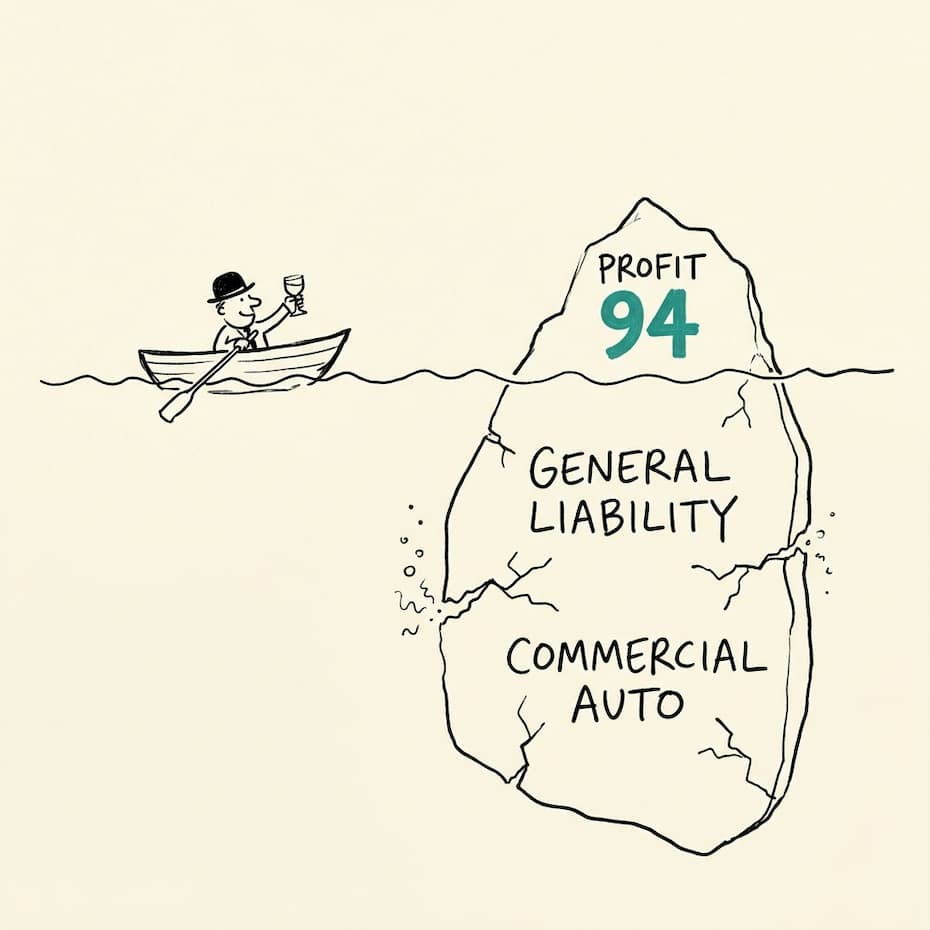
What a carrier spends on claims and expenses for every dollar of premium it takes in. Below 100 is an underwriting profit, above 100 a loss. The industry sits near a 94 combined ratio this year, but general liability and commercial auto are still above 100: the lines small businesses lean on are the ones losing money.
|
|
ALSO THIS WEEK · THE BRIEFS
|
THREE DEVELOPMENTS
|
|
|
PROFITABILITY
/ LOSS RATIOS
· UNITED STATES
INSURANCE BUSINESS · TRIPLE-I AND MILLIMAN · 15 OCTOBER 2026
Triple-I and Milliman forecast a 94.0 net combined ratio for US property-casualty in 2026, an underwriting profit, with workers' comp at 92.7, a twelfth straight profitable year, and personal auto at 95.5. The exceptions are general liability and commercial auto, both still above 100, which is an underwriting loss. The actuaries expect both to stay there. Commercial lines premium is projected to grow about three points a year faster than personal lines through 2028.
|
|
THE FRIEND READ
"Above 100" means the carrier expects to pay out more than it collects on that line, so it keeps nudging the price up across the whole class, regardless of one shop's clean record. On a $3,000 general-liability policy, the kind of 6% bump the casualty market is running adds $180 a year. The industry's profit is real; it just is not coming from the two types of insurance a restaurant with customers or a contractor with a truck cannot go without.
|
|
|
DISTRIBUTION
/ BROKER FEES
· UNITED STATES
BEINSURE · DELEGANCE BROKERAGE · 20 OCTOBER 2026
Delegance Brokerage raised $3.1 million in pre-seed funding led by Grit Capital Partners to run an AI-native commercial brokerage that charges a disclosed flat 5% fee in place of the usual 15% to 25% commission. It is licensed in 51 jurisdictions, holds direct appointments with 25 carriers including Chubb, Travelers and The Hartford, and reports more than $26 million in premium commitments for 2026. A small business gets a quote by uploading its existing policy or answering a short questionnaire; licensed brokers still handle the complex placements and the claims.
|
|
THE FRIEND READ
On a $10,000 program, a 20% commission is $2,000 and a flat 5% fee is $500, a $1,500 gap the buyer rarely sees itemized. Cheaper distribution is welcome, but a flat fee only pays off for the broker who can tell in advance which accounts are quick to place and which will soak up hours. That is the same read the price itself still lacks: the aggregate cost of selling a smaller policy has fallen much faster than its individual price, which is still dependent on the ability to tell one small business from the next.
|
|
|
UNDERWRITING
/ DISCIPLINE
· UNITED STATES
CHUBB Q3 2026 RESULTS · 20 OCTOBER 2026
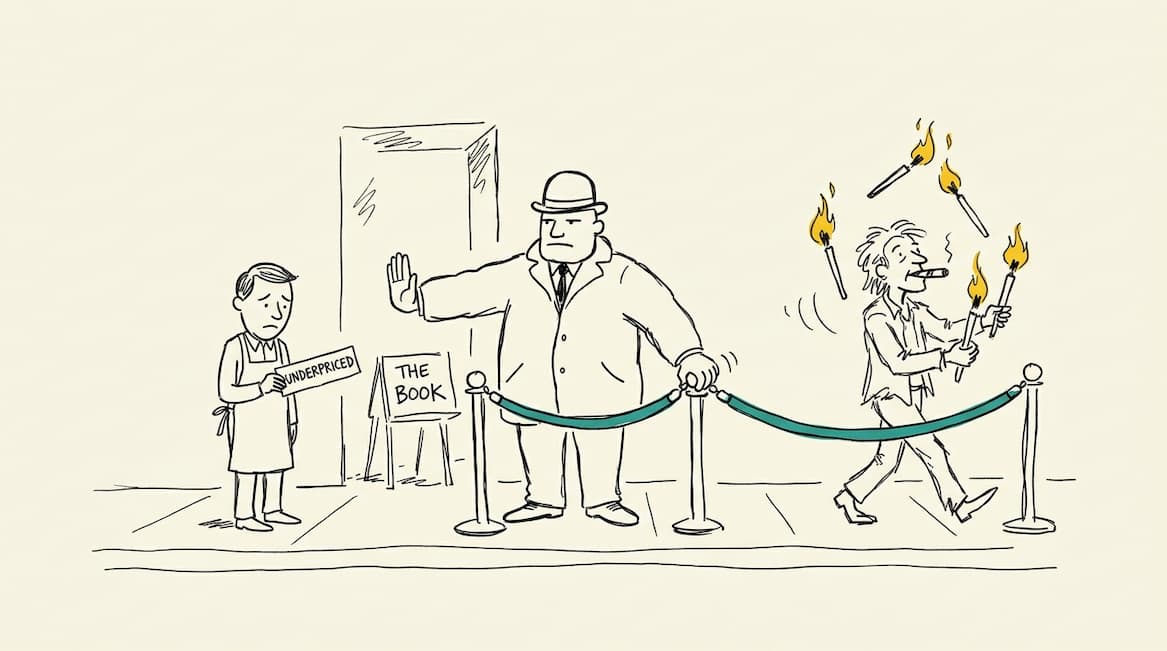
Chubb reported $2.06 billion of property-casualty underwriting income for the third quarter and $5.79 billion across the first nine months, at an 84.0% nine-month combined ratio. Even so, its North America commercial net premiums written fell 2.7% to $5.51 billion. CEO Evan Greenberg put the decline down to deliberate non-renewals at Chubb's discretion, mostly in property and financial lines, and to "purposely shrinking due to inadequate pricing or terms." Excluding those actions, he said, the book grew 1.7%, and he expects growth to return.
|
|
THE FRIEND READ
When the most disciplined carrier in the market walks away, the risk does not disappear, it re-shops. An account Chubb lets go at $40,000 tends to land in the surplus-lines market at a double-digit markup, often $4,000 or more, because the next carrier knows even less about it than Chubb did. Walking away can be the right call when you cannot tell the good account from the bad. The cost of not being able to tell the difference, however, lands on the operator who was good all along and who now needs to find a new insurer.
|
|
THE WEEK, IN ONE LINE
The market is discounting every risk it can see and repricing the one it cannot, and the small operator pays the increase without ever getting the cut.
|
ASK FRIEND
A reader question, monthly
|
Reply to this note with the insurance question you would be slightly embarrassed to ask your broker. The first issue of every month answers one of them in plain language. "Why did my liability go up when everything else went down" is exactly the kind we want. No names, no follow-up sales call, and if the honest answer is "nobody knows," we will say that.
|
ON THE CALENDAR
|
MID-NOVEMBER
|
CIAB's third-quarter commercial survey. We are watching one thing: whether the small account's casualty line keeps climbing faster than its property cover falls.
|
|
30 NOVEMBER
|
The Atlantic hurricane season closes. A quiet year keeps property prices falling and widens the gap between the line that is getting cheaper and the line that is not.
|
|
1 JANUARY 2027
|
Reinsurance renewals. They set how much discount there is to send down the chain in 2027, and whether any of it reaches the casualty line at all.
|
SOURCES
|
FRIEND IS RAISING A SEED ROUND
We're building the risk-intelligence layer for small-business insurance.
The Green, Yellow, and Red score that tells a careful operator from a careless one, so the discount can finally reach the deli. If you want the full plan, or you just want to learn more, reach us at
newcombe@friendanalytico.com, or simply reply to this note. Whether you are thinking about investing or only want to learn more, either is welcome.
|
|
Clarity is the product.
EVERY BUSINESS IS A CROSS-SECTION
· CLARITY IS THE PRODUCT.
A weekly read on small-business insurance from Friend, which builds the score that tells a careful operator from a careless one. You're getting it because you're close to us; if we've read something wrong, reply and say so, the more brutal the feedback the better.
Why you're reading this, in full →
Got this from a friend? Tap Subscribe to get it yourself. Want to pass it on? Forward to a friend opens a ready-to-send note with the signup link.
NEW YORK · 2026 · WRITTEN BY NEWCOMBE, FOUNDER OF FRIEND · YOU'RE RECEIVING THIS AS A FRIEND OF FRIEND, INVESTOR, CLIENT, OR FELLOW TRAVELER. READ ON THE SITE ·
EVERY ISSUE
Editor's log (Thursday draft, Vol. 12): one argued lead on the Marsh Q3 rate split plus three briefs, four distinct outlets (Marsh, Insurance Business, Beinsure, Chubb/SEC), rate cycle told once in the lead. All figures verified against primary sources on 22 October 2026. Removed before the Monday PM share-ready final.
|
|