|
FRIEND OF FRIEND
/ THE WEEKLY
|
VOL. 13
· 2026
|
RISK-INTELLIGENCE FOR SMALL-BUSINESS INSURANCE
· VOL. 13, WEEK OF NOVEMBER 2, 2026
· 5-MINUTE READ
When an insurer cannot price a risk, it does not charge more. It leaves.

|
IN THIS ISSUE
|
•
|
The one to discuss. When an insurer cannot price a risk with enough confidence in the predicted outcome, it typically walks away from quoting rather than…risk charge for it: US home insurers ran 2.02 million non-renewals in a single year, and the insider memos call the plan "reprice, restrict, retreat".
|
|
•
|
AM Best says social inflation has doubled the cost of a commercial auto crash over a decade, and the overflow now lands in the umbrella policy every small fleet carries.
|
|
•
|
New York's 22% workers'-comp cut took effect this month, the one small-business line priced to each individual employer and the only one still getting cheaper.
|
|
•
|
Even in the softest market in years, the smallest accounts renew the hardest: Travelers' small business commercial rates rose 7.8%, against 5.4% for the larger, mid-market accounts.
|
|
FROM THE DESK
A hardware shopkeeper I know (imagined, though I have heard the real version more than once) opened a letter from his building insurer this month. It was not a rate increase. It was a non-renewal, no reason given beyond the address. He found new cover in the end, from a carrier he had never heard of, for about a third more, and lost a week of evenings to the phone securing a new policy. What stayed with me is that nobody had decided he was a bad risk. Nobody had looked at his shop at all. His old carrier could not tell his tidy, sprinklered building from the others on the block, so when the predicted future risk to the overall block (or more likely zipcode) started to worry his insurer, the simplest move was to let policies for the whole block go in the form of non-renewal notices. That is the quiet version of this small business insurance affordability crisis. There is no bill you can argue with. Instead you get a door that closes without a conversation.
NEWCOMBE · FOUNDER, FRIEND · NEW YORK
BY THE NUMBERS
|
2.02M
US home-insurance non-renewals in 2024, up about 61% on the year before
|
6.4%
Yearly rise in commercial-auto liability losses, 2014 to 2024, more than double inflation
|
-22%
New York's 2027 workers'-comp cut, effective this month, the one line getting cheaper
|
+7.8%
Travelers small-commercial renewal change, Q3 2026, against 5.4% for mid-market
|
|
THIS WEEK · THE ONE TO DISCUSS
|
THE ARGUMENT · FIG. 01
|
|
American home insurers ran more than two million non-renewals in a single year, up about 61%, and the memos inside the industry describe the plan in three words: reprice, restrict, retreat. A dropped policy is not a higher bill, it is no bill at all, and it falls first on the owners a carrier cannot see clearly enough into the individual risk to keep. The same retreat is reaching small-commercial property, where it's often even harder to differentiate which operator…well, operates well.
The tell: two million quiet exits
The National Association of Insurance Commissioners published its first national read on the homeowners market this autumn, and the headline is not price, it is availability. Insurers declined to renew about 2.02 million policies in 2024, up from 1.26 million the year before. Non-renewal rates have climbed in every region since 2018, between 96% and 216%, with the West now dropping about 25 policies per 1,000 and accounting for more than four in ten of the exits. A leaked industry memo, reported this month, says the quiet part out loud: modelers are being pressed to manage down forward-looking climate numbers, and the response to physical risk runs in three stages, reprice what you can, narrow what you cannot, and withdraw from the rest.
The second order: it does not stop at the policy
A non-renewal is not just a closed file, it is a vacancy on a block. A data vacancy. Researchers at NYU Stern, matching counties over six years, found that when a county's non-renewal rate rises by a single percentage point, local home values fall about 8%, lower-priced homes nearer 17%, and local retail sales drop about 9%. That last number is the one for us. Retail sales are the storefronts: the deli, the dry cleaner and the hardware store that live on the households around them. When the affordable insurance leaves a neighborhood, the customers, now even more priced out of their home. They leave too, and the small businesses that served those disappearing neighbors are next to feel it, whether or not their own business insurance policy was ever touched.
What has to change: a reason to stay
The stopgap is the state. FAIR plans and other insurers of last resort have roughly doubled their risk transfer and retention rolls, and in doing so they keep a market alive at a price and on terms nobody really loves. Nothing is changing about the underlying assessment of the risk, the state is just providing cover against the advice of the math. The durable fix to this is not a backstop from the government. The fix is a rational based reason for the private insurance carrier to stay in the market and keep insuring. A carrier withdraws from offering a whole class of coverage to a whole region or business class when it cannot tell the risk hardened building from the vulnerable one, and will not bet on not knowing the difference. Give it a trustworthy analytic read on the specific structure and the specific owner and/or operator, and the calculation changes: it can price the individual risks it can see instead of fleeing the whole risk class it cannot. Better information is the difference between a market that retreats and one that stays.
|
THE EXHIBIT
The retreat, and what it leaves behind.
A · US HOME-INSURANCE NON-RENEWALS
NAIC first national homeowners analysis. Insurers declined to renew 2.02 million policies in 2024, up from 1.26 million the year before.
|
MORE NON-RENEWALS →
|
|
2024
|
|
|
2023
|
|
|
0
|
B · WHAT A RISING NON-RENEWAL RATE DOES TO A COUNTY
NYU Stern, per one-point rise in a county's non-renewal rate. Foreclosures also rise about 0.9 of a point. Retail sales, in teal, are the storefronts.
|
LOCAL DECLINE →
|
|
Lower-value homes
|
|
|
Local retail sales
|
|
|
All home values
|
|
|
0
|
Sources: NAIC first national homeowners analysis (25 September 2026); NYU Stern, Billings, Ryan and Yan, via Insurance Business (14 October 2026). Bars to scale within each panel.
|
|
|
THE FRIEND READ
Take the hardware store from the top of this note. The old carrier did not price him, it dropped him, and the replacement in the surplus-lines market cost about a third more, call it $1,400 on a $4,000 policy, for thinner insurance cover backed by no state guaranty fund. None of what happened to his insurance was about his claim history, as he had none, nor was it about his building, which is tidy, alarmed, and sprinklered. He lost his affordable insurance, because nobody looked closely and distinctly at his individual building and his business within. The individual business risk score Friend is building exists to put that closer look back into the business of selling insurance. We are developing a read on the specific shop that is rigorous, accurate, and more than good enough for a carrier to stay in the neighborhood for the risks it now better understands, instead of letting the whole block go because it cannot tell one roof from the next.
|
NAIC HOMEOWNERS ANALYSIS 2026 · NYU STERN · FRIEND ARITHMETIC (ILLUSTRATIVE)
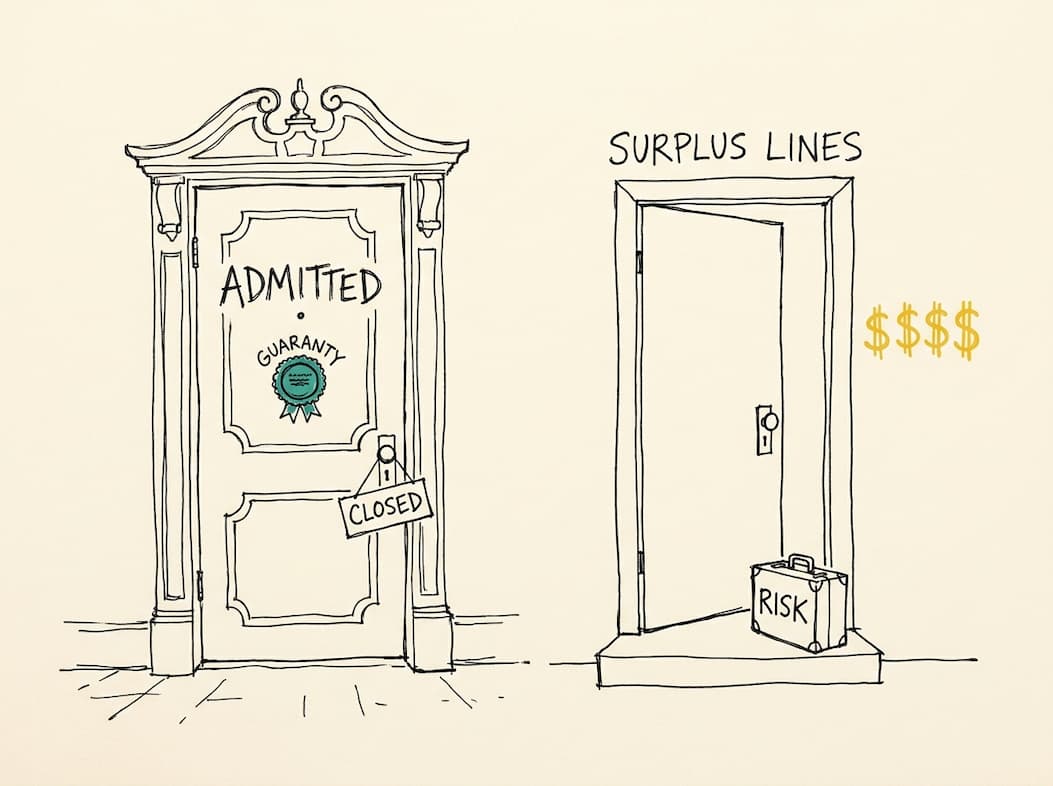
THE JARGON, TRANSLATED
Surplus lines (the non-admitted market)
Where some of the insurance business the standard, state-approved carriers will not write, ends up. These insurers set their own prices and wording and are not backed by the state guaranty fund if they fail. More flexible terms, usually pricier premium, and often the first place a dropped risk lands.
|
|
ALSO THIS WEEK · THE BRIEFS
|
THREE DEVELOPMENTS
|
|
|
LITIGATION
/ COMMERCIAL AUTO
· UNITED STATES
RISK & INSURANCE · AM BEST · 26 OCTOBER 2026
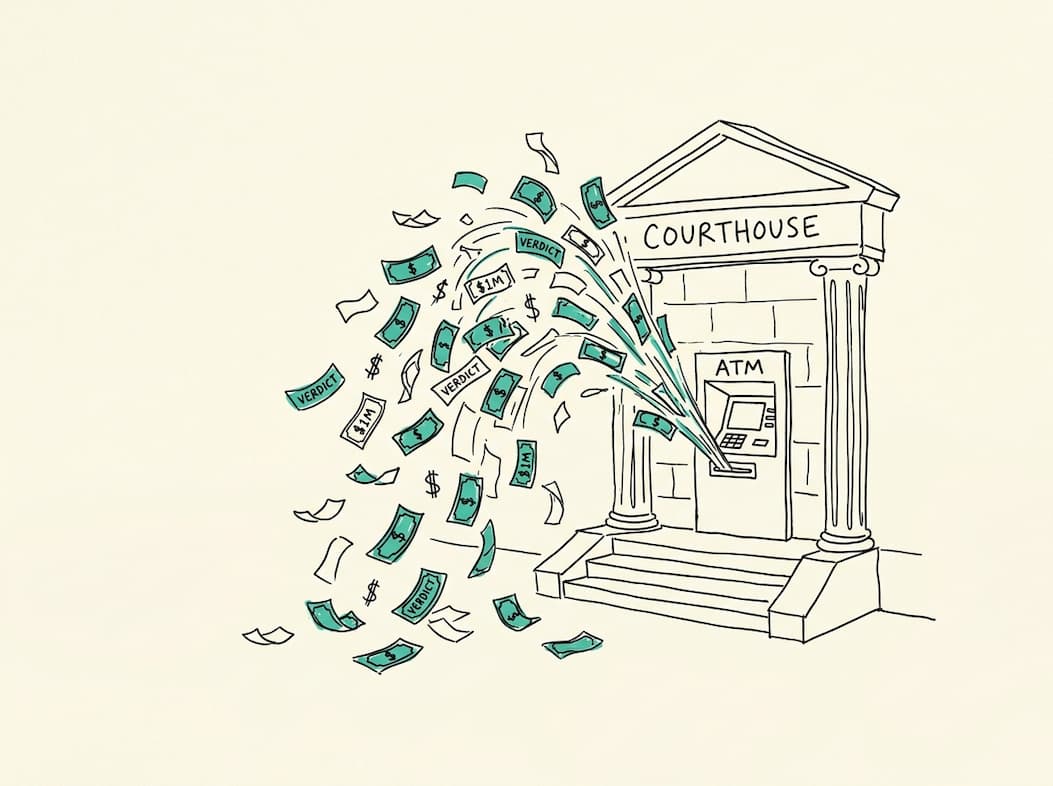
A new AM Best report finds commercial-auto liability loss payments grew 6.4% a year from 2014 to 2024, against 2.8% for ordinary inflation, an 85% rise in severity over the decade. Rising jury awards and slower claim closures left an estimated $16 billion gap between what insurers have paid so far and what they still expect to owe. Because a crash's cost (damage and liability) can often net above the standard $1 million limit, the extra damages spills into umbrella cover. Subsequently, umbrella pricing has pulled away from general liability and not come back down. A glimmer of hope in an otherwise bleak outlook, where Florida's 2023 tort reforms passed, severity of claims has since flattened.
|
|
THE FRIEND READ
A two-truck contractor's $1 million auto limit used to be the whole conversation about commercial car insurance. AM Best's own point is that the losses above that (often too low) limit now flow into umbrella coverage, which is the extra policy on top that pays out (hopefully rarely) after base coverage limits are exceeded. So the cheap-ish first million is the easy part, and the $2 million layer on top, once a few hundred dollars in extra premium, is the coverage line on the renewal that keeps climbing in price, now often past $2,000. The insurance carrier charges every truck in the cohort for the few that may end up in front of a runaway jury, because insurance cannot tell your good driver from the not so good one.
|
|
|
REGULATION
/ WORKERS' COMP
· NEW YORK
CARRIER MANAGEMENT · NY DFS AND NYCIRB · EFFECTIVE 1 OCTOBER 2026
A 21.9% cut in New York workers'-compensation loss costs took effect on 1 October, approved by the state Department of Financial Services on the rating board's analysis. The board tied it to a lower frequency of lost-time claims over three years, and the state put the saving at roughly $1 billion, about $1,779 for the average employer. New York's loss costs have now fallen for six straight years, averaging a 10.3% annual decrease, a run that mirrors cuts in New Hampshire and a pending reduction in Connecticut.
|
|
THE FRIEND READ
Workers' comp is the one line that already does what the rest cannot: it prices you, not your class. Your premium rises and falls on your own payroll and your own claims through an experience modifier, audited every year, so a clean record, your clean record, shows up as a smaller bill. Its individualization is why workers' comp prices can keep falling while generalized liability insurance climbs: the carrier can see each employer well enough to reward the safe one. The $1,779 savings per New York employer is nice and we'll take it. The real lesson is that individualized pricing is possible, and workers' comp is already doing its individual best to price fairly in its one corner of the same small business insurance policy. Unfortunately the rest of the standard coverages, like property and liability, which still tend to price on neighborhood averages.
|
|
|
PRICING
/ SMALL COMMERCIAL
· UNITED STATES
BUSINESS INSURANCE · TRAVELERS Q3 2026 · 16 OCTOBER 2026
Travelers, the largest US commercial carrier, reported third-quarter business-insurance renewals up 4.1% in premium growth overall, with middle-market accounts up 5.4% and small-commercial accounts up 7.8%, the steepest increase of the three. The company called its commercial pricing largely stable and would not call a bottom on property. The Ivans Index, which reads renewal rates from agents' systems, told the same story the same week: five of its six commercial lines rose more slowly than the prior quarter, and workers' compensation was the only line that fell.
|
|
THE FRIEND READ
The market is softening, meaning premiums may still be rising, but not as fast, and in some cases they may even be falling. This softening in pricing power is not evenly spread across insurance types and customer segments, and the smallest buyer often feels any relief last and least. On a $12,000 package, the gap between small commercial at 7.8% and mid-market at 5.4% is about $288 a year extra, which is the price of being too small of a business for a carrier to underwrite one at a time. In a soft market, not getting the extra savings stings a little. In the hard market one we just came out of, the same gap in treatment was the difference between renewing at a much higher price, if even offered, or going to shop your non-renewed business in the even more pricey surplus-lines market, as we mentioned from the top of this issue.
|
|
THE WEEK, IN ONE LINE
The industry's answer to a risk it cannot price is no longer to charge a higher price, it is to close the insurance door on a loyal customer. Better information about an individual risk is the only thing that reopens that door.
|
ASK FRIEND
A reader question, monthly
|
Reply to this note with the insurance question you would be slightly embarrassed to ask your broker. The first issue of every month answers one of them in plain language. "Can my insurer just decide not to renew me, and what do I do if it happens" is exactly the kind we want. No names, no follow-up sales call, and if the honest answer is "nobody knows," we will say that.
|
ON THE CALENDAR
|
MID-NOVEMBER
|
CIAB's third-quarter commercial market survey. One thing we are watching: whether small accounts keep renewing above larger ones.
|
|
1 DECEMBER
|
Year-end enrollment at California's FAIR Plan and other insurers of last resort, the clearest gauge of how far the standard market has pulled back.
|
|
LATE JANUARY 2027
|
Fourth-quarter results from the big carriers, where we will watch whether non-renewal counts finally turn back down.
|
SOURCES
NAIC first national homeowners analysis, via Insurance News Net, 25 Sep 2026 ·
US non-renewals and the industry memo, via Insurance Business, 14 Oct 2026 ·
AM Best social inflation report, via Risk & Insurance, 26 Oct 2026 ·
New York workers' comp loss-cost cut, via Carrier Management, eff. 1 Oct 2026 ·
Travelers Q3 2026 results, via Business Insurance, 16 Oct 2026 ·
Ivans Index Q3 2026, 28 Oct 2026
|
FRIEND IS RAISING A SEED ROUND
We're building the risk-intelligence layer for small-business insurance.
The Green, Yellow, and Red score that tells a careful operator from a careless one, so a carrier can stay and price the block instead of leaving it. If you want the full plan, or you just want to learn more, reach us at
newcombe@friendanalytico.com, or simply reply to this note. Whether you are thinking about investing or only want to learn more, either is welcome.
|
|
Clarity is the product.
EVERY BUSINESS IS A CROSS-SECTION
· CLARITY IS THE PRODUCT.
A weekly read on small-business insurance from Friend, which builds the score that tells a careful operator from a careless one. You're getting it because you're close to us; if we've read something wrong, reply and say so, the more brutal the feedback the better.
Why you're reading this, in full →
Got this from a friend? Tap Subscribe to get it yourself. Want to pass it on? Forward to a friend opens a ready-to-send note with the signup link.
|
Friend Analytico INC. · 236 Livingston St., New York NY 11201, United States
|
|
|