|
FRIEND OF FRIEND
/ THE WEEKLY
|
VOL. 15
· 2026
|
RISK-INTELLIGENCE FOR SMALL-BUSINESS INSURANCE
· VOL. 15, WEEK OF NOVEMBER 16, 2026
· ONE ARGUMENT, THREE BRIEFS
· 5-MINUTE READ
Your insurer makes money twice. You only see one bill.
|
IN THIS ISSUE
|
•
|
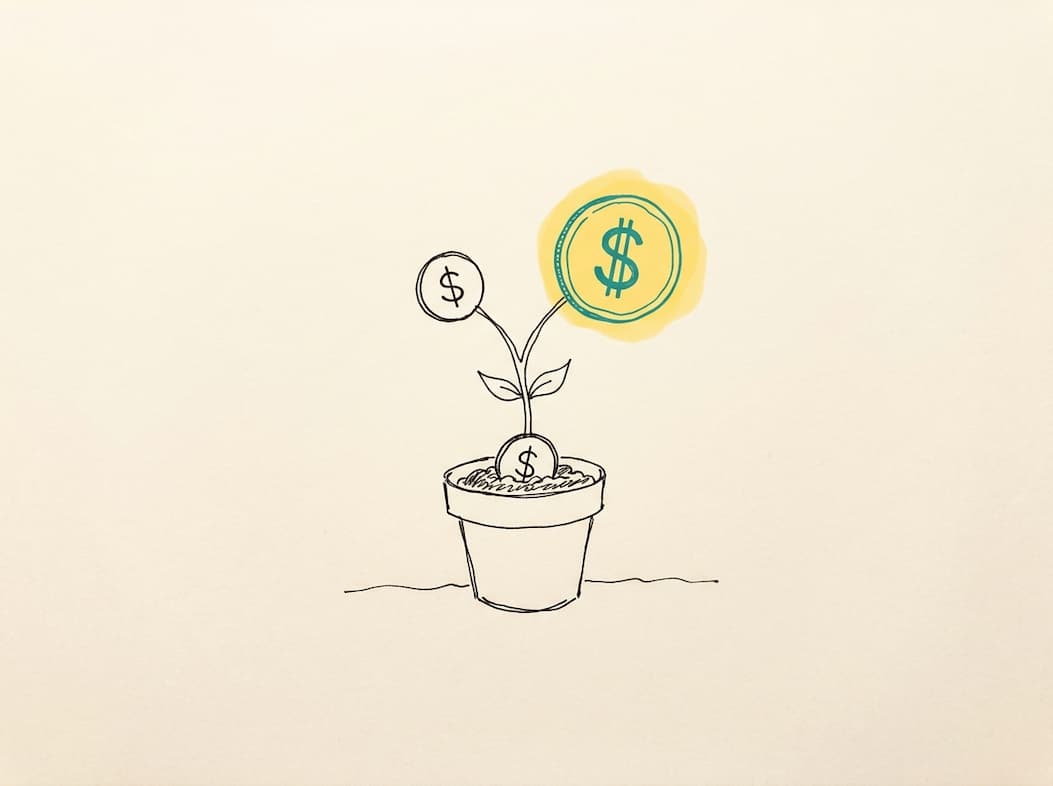
The one to discuss. An insurer earns twice on the same premium it collects, once by underwriting the policy and again by investing the premium while the claims wait to be paid, if ever. Last quarter Berkshire's second profit, $2.73 billion, was more than double its first. The small-business operator pays for both financial transactions (its transfer of risk and the investment opportunity from its premium) but benefits from only the insurance. A captive is the structure that hands both back to the well-run operator.
|
|
•
|
A London startup raised $8.5 million to point AI agents at the small accounts brokers used to turn away because the paperwork cost more than the commission.
|
|
•
|
The storefront's cover is quietly going algorithmic: the digital small-commercial lines at one specialty carrier grew more than 200% while an old liability book at another came back as a $19 million reserve charge.
|
|
FROM THE DESK
The third-quarter numbers from the big carriers landed over the last ten days, and they are a useful reminder of something the monthly rate chatter hides: an insurance company is actually two businesses wearing one coat. There is the underwriting business, premium in and claims out, profit on what’s left over. Then there is the investment business that runs on the premium while it sits in the insurer’s coffers waiting to be paid out in claims and other costs. Berkshire reported results from both parts of its perpetual money machine last quarter and the investment side coughed up more than twice the underwriting side. Laudable to be sure for those that can make a go of this long established way of profiting through risk transfer. I however personally hold some level of long-simmering umbrage that the part of the money machinery that most consistently makes money, the investment part, is rarely if ever an opportunity offered to the operator. You get one renewal letter with one number, and inside that number is a sidebet your insurer is making with your money that you do not share in and cannot see. The three briefs underneath are the same lesson at street level: the tools that place and price the small account are getting cheaper and faster, and the one input none of them seem to supply is a trustworthy read on the individual risk, which is the whole of what Friend is here to build.
NEWCOMBE · FOUNDER, FRIEND · NEW YORK
BY THE NUMBERS
|
$2.73B
Berkshire's Q3 insurance investment income, the second profit bucket, earned on the premium it holds
|
$1.35B
Its Q3 underwriting profit, the first profit bucket, down 43% from a year earlier as it declined to match price
|
$178.5B
Its insurance float at September 30, other people's premium invested while the claims wait
|
90.9
Travelers' business-insurance combined ratio last quarter, about 9 cents of underwriting profit on the dollar
|
|
THIS WEEK · THE ONE TO DISCUSS
|
THE ARGUMENT · FIG. 01
|
|
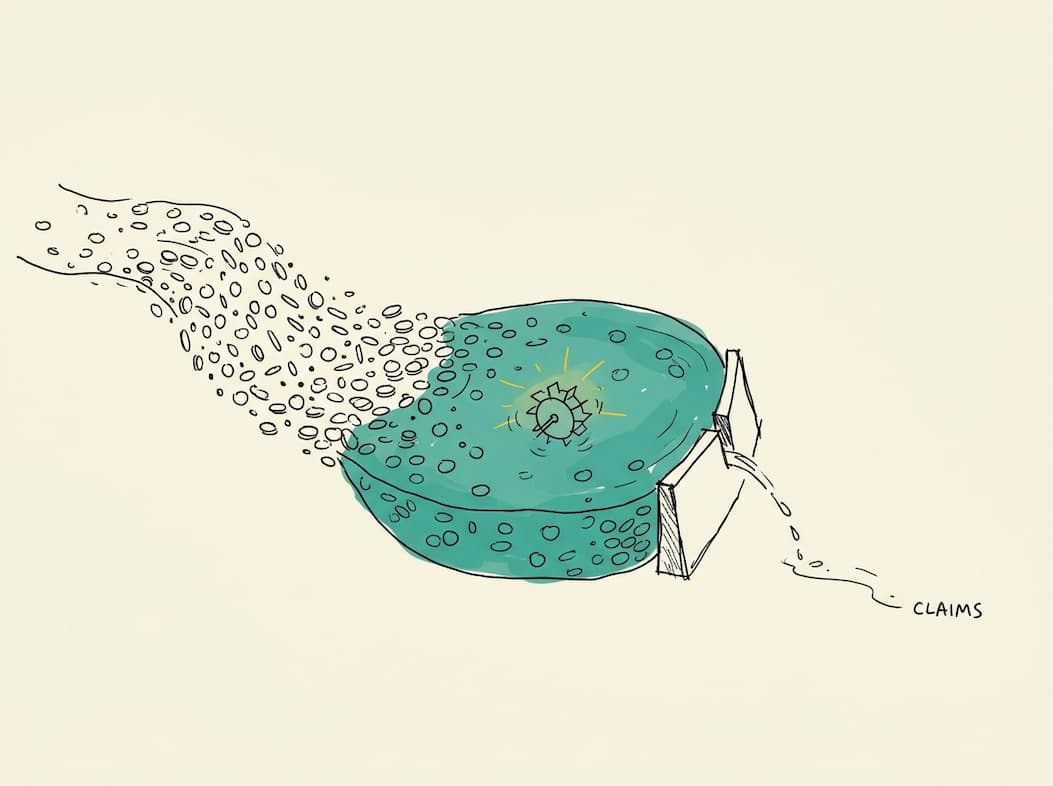
An insurance company earns on your policy in two places. It earns if the premium collected beats the sum of the claims and the costs paid. Any gap between the math, the combined ratio measures. Cleverly, the insurer earns again on the money flowing through its pipes, because it collects the premium now, pays the claims later, and invests the difference in the meantime. That second cash engine has a name, float, and last quarter at the largest insurer in the country it threw off more than twice the cheddar the first premium-claim powered engine did. The small-business operator who wrote the check to buy the policy funds both engines, but is often shown only the benefits of one of them.
The first profit: the combined ratio, and it is thin this year
The combined ratio (CR) is claims plus expenses divided by premium, so a CR of 90 means the insurer keeps about 10 cents of underwriting profit on the dollar and a CR of 100 means it breaks even…before investing. Last quarter the CR numbers were decent but tightening. Travelers ran its business-insurance book at a CR of 90.9. Chubb's North America commercial combined ratio rose to 86.3 from 81.5, AIG's North America commercial to 92.9 from 82.6, and The Hartford's middle and large commercial, on an underlying basis, all the way to 99.5 from 91.4, a hairsbreadth away from losing money on underwriting alone. Berkshire's own insurance underwriting profit fell 43% as it chose to let business walk rather than match a soft price. The first engine, the Underwriting one, in other words, is running warm and showing service lights on the dash.
The second profit: float, the one you fund and never see
Here is the engine the policy renewal letter never mentions. An insurer takes the premium up front and pays claims over months or years, in between it invests the pile elsewhere. They call it the “float”. Berkshire put its float at about $178.5 billion at the end of September. The investment income on that money bin was $2.73 billion for the quarter, compared against $1.35 billion of underwriting profit, its first engine. The float is built from policyholders' money, yet in most cases the return on it belongs entirely to the insurer. A breakeven combined ratio at or near 100 can still sit on top of a very profitable company, because the real money was never in the underwriting line at all. This is not a scandal, it is the design, and it is the single most important fact about insurance that a business owner is almost never told.
Why an average cannot tell you which kind of customer you are
A combined ratio is a blended number across a whole book, so a 91 is an average of the accounts that cost the carrier almost nothing and the accounts that cost it a fortune. A careful operator priced inside that blend is quietly paying for the careless one next door, and nothing in their insurance bill tells either of them which type of account they are. The careful could, on their individual policy level, year in and year out, have a wildly profitable combined ratio due to low claims and costs associated with their account. The insurer’s float sits on top of the same averaging. Only thing worse than being viewed as just a number is being clumped into an average of many numbers, most of which have nothing to do with the number that actually speaks to your careful operations and the true potential profitability of your policy.
|
THE EXHIBIT
Berkshire's two profits last quarter: the one you are billed for, and the one you fund without seeing.
Berkshire Hathaway insurance operations, third quarter 2026, in billions of dollars. In teal, the investment income earned on the float; in ink, the underwriting profit. Both come off the same premium. Bars drawn to scale.
|
BIGGER PROFIT →
|
|
Investment income on the float
|
|
|
Underwriting profit
|
|
|
0
|
Source: Berkshire Hathaway third-quarter 2026 news release, 7 November 2026. Float of about $178.5 billion at 30 September 2026. Investment income and underwriting earnings are insurance-operations figures for the quarter.
|
|
|
THE FRIEND READ
Put it on a real bill. A restaurant pays $30,000 for its package and liability. At a 90.9 combined ratio the carrier keeps about $2,730 of underwriting profit after roughly $27,270 of claims and costs, and that $2,730 is the only profit the owner could ever infer from the paperwork. The second profit runs silently on the same $30,000 as it sits waiting to be paid out, and it belongs to the carrier, not the restaurant. A captive is the structure that flips that: the members of a captive own the insurer, so both profit pools, leftover underwriting and investment returns come back to the owner/operators instead of the traditional insurers. The score Friend is building is the piece of the puzzle that makes a captive safe to join, the graded read that tells the careful members from the careless ones before they jump into a pool together.
|
BERKSHIRE HATHAWAY Q3 RELEASE · INSURANCE BUSINESS · FRIEND ARITHMETIC (ILLUSTRATIVE)
THE JARGON, TRANSLATED
Float
The pile of premium an insurer has collected but not yet paid out in claims. It sits on the books for months or years, and the insurer invests it and keeps the return. Float is other people's money, earning for the carrier until the claim comes due.
|
|
ALSO THIS WEEK · THE BRIEFS
|
THREE DEVELOPMENTS
|
|
|
INSURTECH
/ DISTRIBUTION
· LONDON AND US
TECH.EU · ANCEP FUNDING ANNOUNCEMENT · 10 NOVEMBER 2026
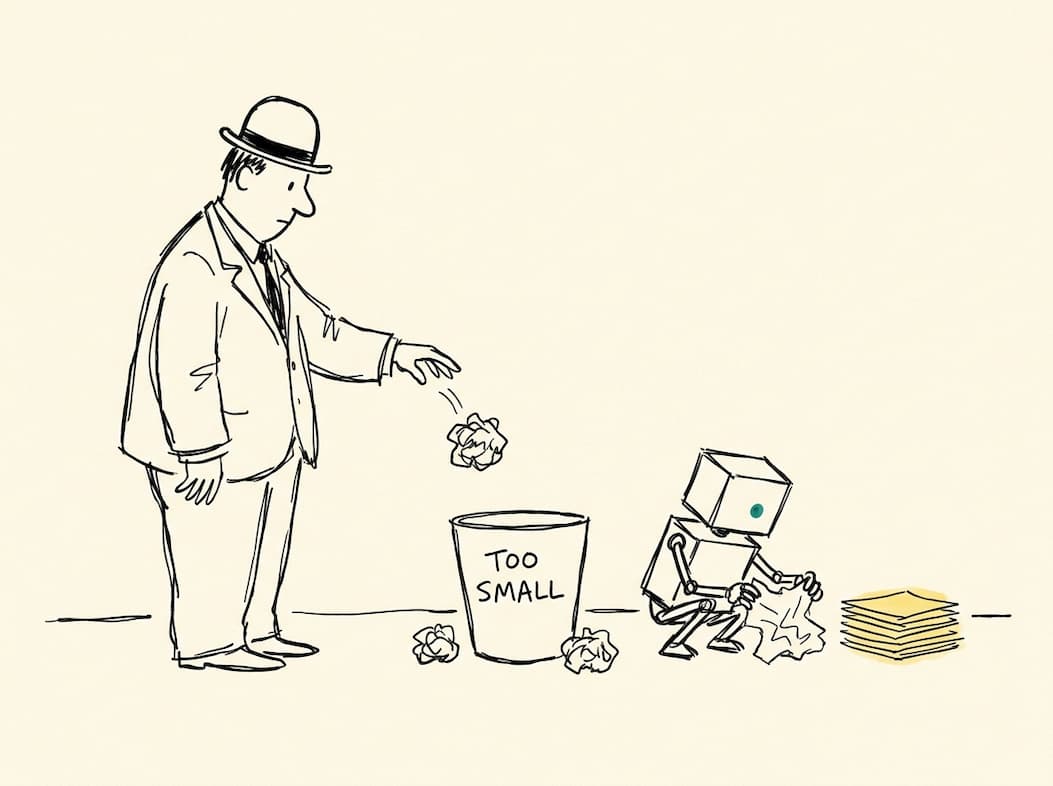
Ancep, a London-based company, raised $8.5 million in a round led by Creandum, with Kleiner Perkins and Vicus Ventures and other angels, including a former Aon chief financial officer. It builds AI agents that do the administrative work of placing commercial insurance: they read a client submission, prepare the broker paperwork, and approach insurers for terms by email, portal, or API using the systems brokers already use. A licensed broker still reviews the AI output and binds the cover. The pitch, in the chief executive's words, is net new revenue: the small accounts a broker currently declines because the manual work costs more than the commission.
|
|
THE FRIEND READ
A $1,500 policy pays a broker maybe $150 in commission, and an hour spent re-keying an application eats most of it, which is the real reason the smallest shops seeking fairly priced cover get waved off at the door. Automating that hour is a genuine good for an operator who could not get a call back before. But notice what the AI agents do and do not do: they prepare and place the paperwork and price, but they stop at the point where someone has to judge whether the risk is worth writing and at what price. The intake is going to a machine. The read of the risk is the part that stays with a human. It is the part that decides whether the quote the small shop finally gets is a fair one, and it is the part Friend is building.
|
|
|
SMALL COMMERCIAL
/ DISTRIBUTION
· UNITED STATES
INSURANCENEWSNET · BOWHEAD SPECIALTY Q3 2026 RESULTS · 3 NOVEMBER 2026
Bowhead Specialty reported third-quarter gross written premium of $256.4 million, up 10.8%, but the growth was lopsided. Its digital model, the small-commercial lines quoted and bound by algorithm rather than by an underwriter, reached $21.9 million, up 221.7%, and its Baleen Specialty unit alone grew 155.4% to $15.8 million. The company ran a 95.9% combined ratio and earned $12.9 million of net income for the quarter. The traditional, underwriter-reviewed lines grew in the single digits. The part of the book that touches the smallest accounts is the part moving to a machine.
|
|
THE FRIEND READ
A $2,000 general-liability policy for a cleaning company or a cafe is now likely to be priced in seconds by a model, with no underwriter ever looking at the business. That is good news on cost and speed, and it is neutral on fairness: an algorithm priced on the class average will hand the careful operator the careless one's bill just as reliably as a rushed human would, only faster. When the quote comes from software, the only thing standing between a good operator and someone else's loss history is the quality of the data the model reads. A $2,000 policy mispriced by a fifth is $400 a year the careful owner should not be paying, and at machine speed that error scales to the whole book (and block) overnight.
|
|
|
CASUALTY
/ RESERVES
· UNITED STATES
JAMES RIVER GROUP · Q3 2026 RESULTS (SEC FORM 8-K) · 9 NOVEMBER 2026
James River, an excess-and-surplus-lines specialist, posted a third-quarter net loss of $189.4 million. Most of it was a non-cash writedown left over from a 2007 deal, but underneath, a review of its reserves turned up $19.2 million of adverse development, driven by a product-liability portfolio now in runoff. The adjusted combined ratio climbed to 115.6% from 94.0% a year earlier. Adverse development is the late admission that claims on business already written are costing more than the money set aside for them. New submissions still rose 8%, but a book priced years ago came due at a number nobody priced right the first time.
|
|
THE FRIEND READ
This is the lead's point from the other direction. A combined ratio over 115 means the first profit engine, underwriting, ran at a heavy loss…long after the fact, and no amount of investment income on the float buys back a book that was graded wrong at inception. Casualty insurance is where an underpriced read hides longest: a small manufacturer's $6,000 product-liability policy can look profitable for five years and then surface as a claim that costs the carrier ten times the premium, long after anyone remembers underwriting it. The reserve charge is simply the bill for a read nobody did carefully enough in the first place, arriving late and with interest.
|
|
THE WEEK, IN ONE LINE
The money an insurer makes on your premium while it waits to pay your claim is the quiet profit engine of the whole business, and the question for a small operator is simple: who owns that second, often hidden profit, and what would it take to own a share of your own?
|
ASK FRIEND
A reader question, monthly
|
Reply to this note with the insurance question you would be slightly embarrassed to ask your broker. The first issue of every month answers one in plain language. "If my insurer invests my premium, do I ever see any of that?" is exactly the kind we want. No names, no follow-up sales call, and if the honest answer is "nobody looked," we will say that.
|
ON THE CALENDAR
|
LATE NOVEMBER
|
The Council of Insurance Agents and Brokers third-quarter market index and WTW's CLIPS survey are both due, the next dedicated reads on where small-commercial rates are actually landing.
|
|
EARLY DECEMBER
|
The Ivans Index for November. One thing we are watching: whether the package and property lines that carry the storefront finally follow the rest of the market down.
|
|
JANUARY 2027
|
Travelers, The Hartford and Chubb report the fourth quarter and full year, the first full look at whether the thin underwriting margins of the third quarter held or kept slipping.
|
SOURCES
Berkshire Hathaway third-quarter 2026 news release, 7 Nov 2026 (underwriting, investment income, float) ·
Berkshire posts steepest Q3 underwriting decline among US carriers, with Travelers, Chubb, AIG and Hartford combined ratios, via Insurance Business, 9 Nov 2026 ·
Creandum leads $8.5m funding for Ancep, via Tech.eu, 10 Nov 2026 ·
Bowhead Specialty reports third-quarter 2026 results, via InsuranceNewsNet, 3 Nov 2026 ·
James River Group third-quarter 2026 results, SEC Form 8-K, 9 Nov 2026
|
FRIEND IS RAISING A SEED ROUND
We're building the risk-intelligence layer for small-business insurance.
The Green, Yellow, and Red score that tells a careful operator from a careless one, so a carrier can stay and price the block instead of leaving it. If you want the full plan, or you just want to learn more, reach us at
newcombe@friendanalytico.com, or simply reply to this note. Whether you are thinking about investing or only want to learn more, either is welcome.
|
|
Clarity is the product.
EVERY BUSINESS IS A CROSS-SECTION
· CLARITY IS THE PRODUCT.
A weekly read on small-business insurance from Friend, which builds the score that tells a careful operator from a careless one. You're getting it because you're close to us; if we've read something wrong, reply and say so, the more brutal the feedback the better.
Why you're reading this, in full →
Got this from a friend? Tap Subscribe to get it yourself. Want to pass it on? Forward to a friend opens a ready-to-send note with the signup link.
|
Friend Analytico INC. · 236 Livingston St., New York NY 11201, United States
|
|
|