|
FRIEND OF FRIEND
/ THE WEEKLY
|
VOL. 16
· 2026
|
RISK-INTELLIGENCE FOR SMALL-BUSINESS INSURANCE
· VOL. 16, WEEK OF NOVEMBER 23, 2026
· ONE ARGUMENT, THREE BRIEFS
· 5-MINUTE READ
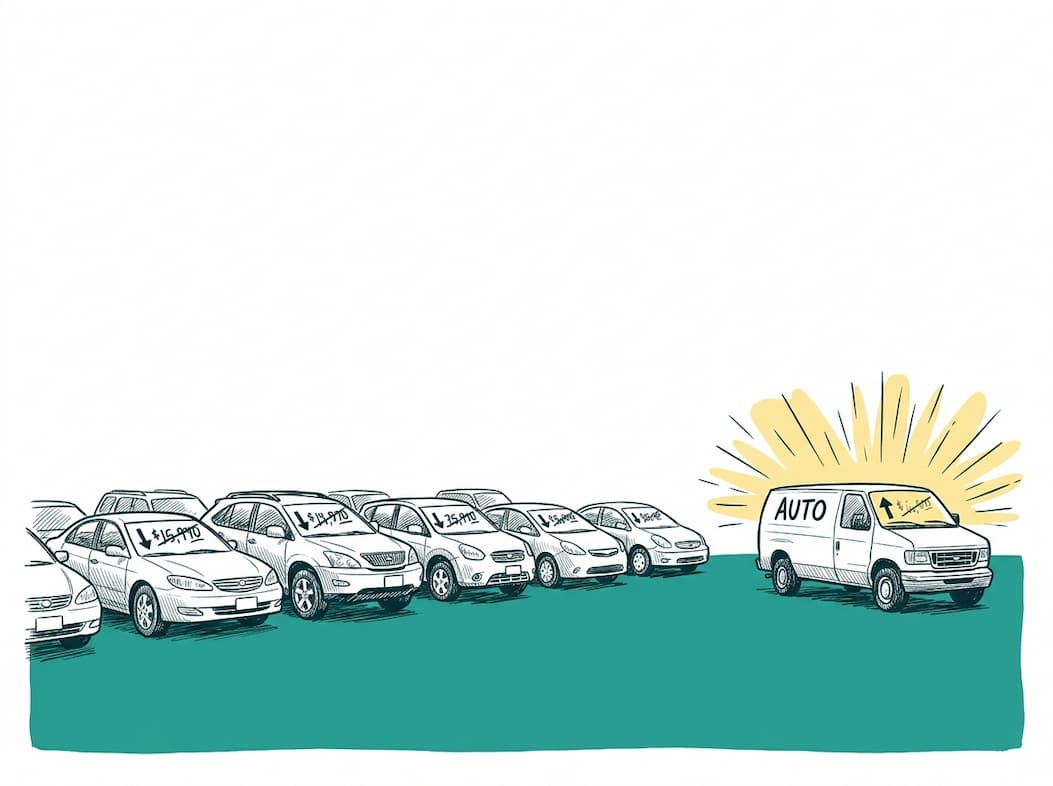
Almost every commercial rate fell last quarter. Commercial auto has risen every quarter for fifteen years.
|
IN THIS ISSUE
|
•
|
The one to discuss. Commercial insurance premium rates fell again last quarter, down 1.3% overall and 6.2% on property, yet commercial auto rose for the 61st straight quarter. The split is rate adequacy, quarter after quarter: rates fall where the market overall trusts its read of the risk, and keep rising only where losses outran every read. A cheaper premium cost per risk (i.e. ‘rate’) is the market relaxing on a whole class, not a verdict that your particular small business is low-risk.
|
|
•
|
Cowbell will sell small businesses a standalone policy for the mistakes their own AI agents make, a risk with no loss history, priced on a graded read of how tightly each shop holds the reins.
|
|
•
|
A newcomer cleared its last US hurdle to hand niche programs their own capacity, and the New York Times showed how two Wall Street-owned life insurers misreported $21 billion that state examiners never caught.
|
|
FROM THE DESK
The brokers' own quarterly scorecard landed this week, and it is worth reading the way you would read a thermometer rather than a verdict. Almost every commercial line got cheaper again last quarter. The one that did not, commercial auto, has now gone up in rate for sixty-one quarters in a row, more than fifteen years without a single break. That contrast is the whole of what I want to sit with. The market is confident enough about property and management liability to keep cutting their prices, and it is still unable, after fifteen years of trying, to get ahead of the losses on a delivery van with a logo to sue on its side panel. Price, in other words, is tracking how well the industry thinks it has read a risk, not how risky the thing actually is. The three briefs underneath are the same lesson from three directions: an insurer pricing the brand-new mistakes an AI agent can make, a fresh balance sheet lining up behind niche programs, and a $21 billion gap in two Wall Street-owned life insurers that the examiners paid to catch it did not. One prices a risk with no history, one funds a read it hopes is right, and one is a read nobody did at all. Every one still comes down to whether anyone has truly read the thing, which is what we are here to build. Friend reads the thing.
NEWCOMBE · FOUNDER, FRIEND · NEW YORK
BY THE NUMBERS
|
+6.7%
Commercial auto's Q3 rate rise, its 61st straight quarterly increase and the only major long-tail line still hardening
|
-1.3%
The average commercial premium rate change last quarter, a third straight quarterly decline as carriers compete harder
|
-6.2%
Commercial property, the steepest fall of any major line, where the market is surest it has the read
|
15
Years commercial auto has risen without a single down quarter, the loss trend the read never caught
|
|
THIS WEEK · THE ONE TO DISCUSS
|
THE ARGUMENT · FIG. 01
|
|
Once a quarter the brokers take the temperature of the whole commercial market, and this time almost every reading cooled. Average premium rates fell 1.3%, their third straight quarterly dip, with commercial property down 6.2%, management liability down 4.1% and workers' comp down 3.6%. One line broke the pattern: commercial auto rose 6.7%, its sixty-first straight quarterly increase. The pattern underneath is not random. Price falls where the market is confident it has finally read the risk, and it keeps climbing only on the one line where the losses have outrun every read for fifteen years. So a cheaper renewal tells you how sure the market feels about your class average, not necessarily whether your individual business is a good risk.
The one number that would not fall
The Council of Insurance Agents and Brokers surveys the brokers who place most of the country's commercial cover, so its quarterly index is the closest thing the market has to a thermometer. Last quarter it read 1.3% colder across all account sizes, a shade less of a drop than the 2% fall in the spring, which the Council put down to carriers competing harder for business. Underneath the average the lines split cleanly. Property fell the most at 6.2%, directors-and-officers 4.1%, workers' comp 3.6%, and large accounts 3.1%. Commercial auto went the other way, up 6.7% after a 4.5% rise the quarter before, and it has now risen every single quarter for more than fifteen years. Four of the market's biggest lines got cheaper, and the one that has never stopped getting more expensive kept right on going.
Why the market cuts some prices and not others
An insurance line keeps raising its price while the price still lags the losses, and it softens once the price has caught up. That is rate adequacy, and it explains the whole chart. Property fell fastest because the market is confident it can read property now: decades of claims, catastrophe models accepted in state filings, a building you can inspect and measure. The market believes it has that risk pinned, so it competes the price down. Commercial auto keeps rising because its losses, distracted driving, the cost of repairing a modern vehicle, and the steady drift up of jury awards, have outrun every read the industry has tried for fifteen years. The price is still chasing a loss it cannot get ahead of. Strip out the jargon and the lesson is blunt: a price moves on how well the market thinks it has read the risk in aggregate, not on how risky the individual thing actually is.
What a cheaper bill means for the careful operator
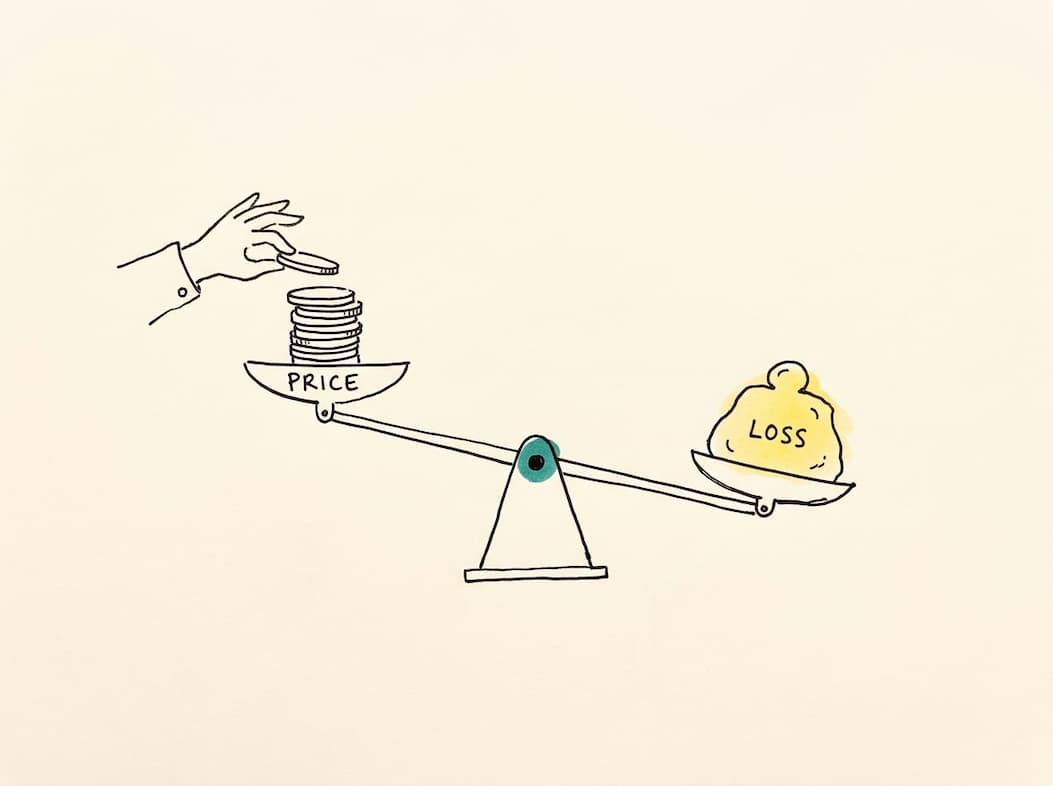
Here is the trap for a good small business. When the market cuts a class price, it cuts it for the whole class, the careful shop and the careless one on the same block, by the same percentage. The cut is the market relaxing about a category, not a reward for the operator who runs a tight ship. So a storefront can get a cheaper package renewal this year and still be overpaying, because the price it dropped from was a class average that never looked at the business in the first place. A falling premium feels like good news, and sometimes it is, but it is never the same thing as a fair one. The only number that would be fair is one set on the individual risk, and that is precisely the number the market still does not produce for the individual storefront.
|
THE EXHIBIT
One line never joined the soft market: commercial auto, quarter after quarter.
Commercial auto premium change by quarter, Q3 2025 to Q3 2026, with the overall market change beside it. Auto rose every quarter while the overall market slid from a 1.6% rise into cuts. Teal bars drawn to scale.
|
Q3 2025
|
|
|
Q4 2025
|
|
|
Q1 2026
|
|
|
Q2 2026
|
|
|
Q3 2026
|
|
Source: Council of Insurance Agents and Brokers quarterly Commercial P/C Market Index, Q3 2025 to Q3 2026, via Insurance Journal and Business Insurance. Teal bars are commercial auto; the market figure is the average change across all account sizes.
|
|
|
THE FRIEND READ
Put it on a real bill. A landscaping company with two trucks pays about $8,000 for its commercial auto and $12,000 for its property and package. This quarter the auto renews roughly $540 higher, up 6.7%, and the property about $744 lower, down 6.2%, so the owner nets a small win and assumes the market judged her fairly. It did not judge her at all. Both moves are class averages: the auto line rose because the industry still cannot get ahead of the losses behind it, and the property line fell because the industry is confident it can. Neither number asked whether her trucks are the careful ones on the block. That read, a Green, Yellow or Red on her specific operation, is the thing Friend is building, and it is the only thing that turns a cheaper renewal into a fair one.
|
CIAB QUARTERLY INDEX (Q3 2025 TO Q3 2026) · INSURANCE JOURNAL · BUSINESS INSURANCE · FRIEND ARITHMETIC (ILLUSTRATIVE)
THE JARGON, TRANSLATED
Rate adequacy
Whether the price for a line of business is high enough to cover the losses and expenses it will produce. A line keeps raising rates while the price still lags its losses, and softens once the price has caught up. It is why commercial auto can keep rising while everything around it falls.
|
|
ALSO THIS WEEK · THE BRIEFS
|
THREE DEVELOPMENTS
|
|
|
INSURTECH
/ LIABILITY
· UNITED STATES
SILICONANGLE · COWBELL AI LIABILITY INSURANCE · 10 NOVEMBER 2026
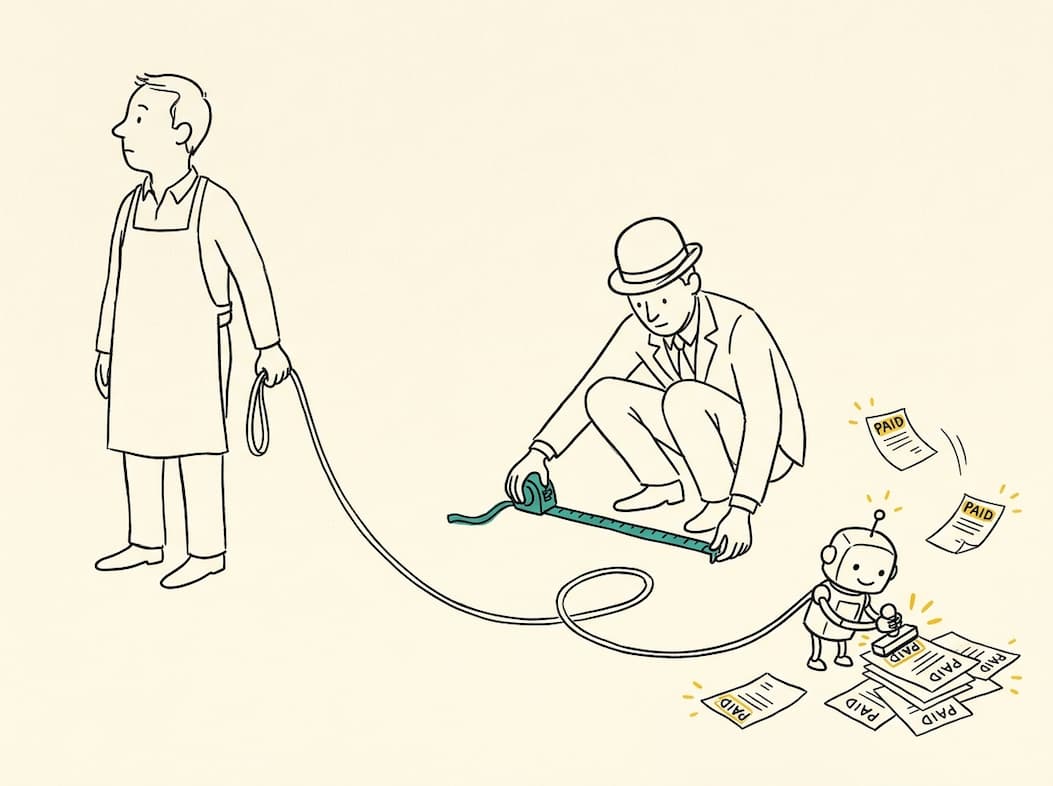
Cowbell, a US cyber insurer, unveiled a standalone AI liability policy for small and midsize businesses, on sale from January 1, 2027 through wholesale brokers. It pays when a company's own AI agent causes harm, an "AI incident" that covers model drift, manipulation of the tool, and actions it takes on its own. The cover runs from first-party losses, a duplicate supplier payment, the cost of taking an agent offline and correcting bad output, to third-party claims, including defense and damages for discrimination or bodily injury from relying on the tool. There is no claims history for any of this, so Cowbell underwrites on three measures it calls observability, autonomy, and governance: how closely a business watches its AI and how much authority it has to act alone.
|
|
THE FRIEND READ
A ten-person marketing shop that lets an AI agent send its invoices and answer its customers has no claims record for any of it, and neither does the insurer. So the price for insuring this new risk cannot come from history. It has to come from a read of the business itself, which is exactly what observability, autonomy, and governance are: a graded look at how the shop runs its tools. That is the whole idea of Friend in robotic miniature. When there is no past to price from, the only fair number comes from grading the operator in front of you. A careful shop that logs every action and keeps a human on the ‘approve’ button is a different risk from one that lets the bots loose, and a $3,000 policy that cannot tell them apart overcharges the careful one. Here the read is not a nicety. It is the only thing there is.
|
|
|
DISTRIBUTION
/ SPECIALTY
· UNITED STATES
INSURANCE BUSINESS · PINION INSURANCE · 13 NOVEMBER 2026
Pinion Insurance won change-of-control approval from Oklahoma, its last US regulatory hurdle, to complete the purchase of Catlin Specialty, an excess-and-surplus carrier, and begin binding domestic specialty business. Backed by up to $180 million from Barings, Pinion is in talks with managing general agents across US specialty lines, and its model shares underwriting, exposure and claims data in real time among the carrier, the agent and the capital behind it. A managing general agent is a specialist that underwrites a narrow slice of risk on someone else's balance sheet; US MGA premium reached about $128 billion in 2025. The money is lining up behind whoever can grade a narrow slice well.
|
|
THE FRIEND READ
Picture a program that covers two thousand roofers at an average $4,000 premium. That is an eight-million-dollar book, and it lives or dies on one thing: whether its model can tell the careful roofer from the one who will step off a wet roof in January. Pinion is the balance sheet betting that a focused team reads roofers better than a generalist carrier reads everything at once, which is often true. But new capacity does not make that read. It just funds whoever claims to have it. For the operator inside the program the question is not how deep the pockets behind it are, it is whether the people grading her actually looked at her shop, or simply sorted her by trade code and moved on.
|
|
|
WALL STREET
/ REGULATION
· UNITED STATES
THE NEW YORK TIMES · DELAWARE LIFE AND CLEAR SPRING · 16 NOVEMBER 2026
Two life insurers controlled by the billionaire Mark Walter, Delaware Life and Clear Spring Life, had underreported by about $21 billion the money they invested with businesses affiliated with Walter's own empire, the firms disclosed, and overnight Delaware Life's affiliated investments jumped to roughly 42% of its investable assets from a reported 3%. Delaware's examiners, who had found no significant issues a year earlier, missed it, and prosecutors are now investigating whether any laws were broken. More than 100 US life insurers are controlled by or tied to a private-equity or investment firm, some routing customer premiums into the debt behind AI data centers.
|
|
THE FRIEND READ
Strip away the scale and this is a clarity failure, the thing we talk about every week, wearing a much bigger coat. A $21 billion gap sat in public filings and the examiners paid to read them signed off anyway. Picture the same disease at the other end of the market: a careful bakery handed a $4,000 package renewal that no underwriter ever actually read, priced on the class average, overpaying maybe $800 a year and never knowing. The life insurer misstates $21 billion and the regulators do not catch it; the bakery is misread by a fifth and nobody even looks. Different numbers of zeros, same root: a figure nobody independently checked is not one anyone should trust. Friend builds that check at the small end, where the careful operator has the most to gain from finally being read.
|
|
THE WEEK, IN ONE LINE
The market cut almost every commercial price this quarter and kept raising the one line it never learned to read, then spent the rest of the week on risks and books nobody had truly read, an AI's mistakes, a niche program, and $21 billion that slipped straight past the regulators, every one circling the same question: has anyone actually read what they are pricing or signing?
|
ASK FRIEND
A reader question, monthly
|
Reply to this note with the insurance question you would be slightly embarrassed to ask your broker. The first issue of every month answers one in plain language. "If the whole market got cheaper this quarter, why didn't my renewal?" is exactly the kind we want. No names, no follow-up sales call, and if the honest answer is "nobody looked," we will say that.
|
ON THE CALENDAR
|
LATE NOVEMBER
|
WTW's CLIPS survey, the other main read on commercial rates, is still to land after the brokers' index on 18 November. One thing we are watching: whether it agrees that the fall is slowing.
|
|
EARLY DECEMBER
|
The Ivans Index for November, the monthly read on where small-commercial renewals are actually settling, and whether the storefront's package line finally follows the market down.
|
|
JANUARY 2027
|
Cowbell's standalone AI-agent liability cover goes on sale to small businesses on the 1st, the first dedicated read on pricing a risk with no past. And a Democratic Congress convenes, with Senator Warren signaling tougher oversight of the Wall Street-owned insurers in this week's briefs.
|
SOURCES
Commercial property premium decreases of 6.2% drive overall soft Q3, CIAB, via Insurance Journal, 18 Nov 2026 ·
Commercial insurance premiums fall 1.3% in the third quarter, CIAB, via Business Insurance, 17 Nov 2026 ·
Cowbell unveils standalone AI liability insurance for small businesses, via SiliconANGLE, 10 Nov 2026 ·
Pinion Insurance clears US hurdle to write MGA specialty programs, via Insurance Business, 13 Nov 2026 ·
Wall Street Moved Into Insurance. Can State Regulators Keep Up?, via The New York Times, 16 Nov 2026
|
FRIEND IS RAISING A SEED ROUND
We're building the risk-intelligence layer for small-business insurance.
The Green, Yellow, and Red score that tells a careful operator from a careless one, so a carrier can stay and price the block instead of leaving it. If you want the full plan, or you just want to learn more, reach us at
newcombe@friendanalytico.com, or simply reply to this note. Whether you are thinking about investing or only want to learn more, either is welcome.
|
|
Clarity is the product.
EVERY BUSINESS IS A CROSS-SECTION
· CLARITY IS THE PRODUCT.
A weekly read on small-business insurance from Friend, which builds the score that tells a careful operator from a careless one. You're getting it because you're close to us; if we've read something wrong, reply and say so, the more brutal the feedback the better.
Why you're reading this, in full →
Got this from a friend? Tap Subscribe to get it yourself. Want to pass it on? Forward to a friend opens a ready-to-send note with the signup link.
|
Friend Analytico INC. · 236 Livingston St., New York NY 11201, United States
|
|
|